AI Design Intelligence for Product Teams
Project
ContextOS
Year
2026
A SaaS concept exploring how AI can connect Figma, Jira, Slack, Notion, and research workflows to surface handoff gaps, component drift, and sprint risks before they slow engineering down. I designed and prototyped the full product experience to show how design teams could move from scattered context to clear, prioritized action.
Scope of Work

Overview
A SaaS concept exploring how AI can turn scattered design, product, and engineering contexts into clearer decisions.

The Problem
Design teams were not lacking tools. They were losing time because decisions, handoff details, and system rules lived in different places.

Goals
The goal was to design a layer that brings tool context together, surfaces risk early, and helps teams act before small gaps become delivery blockers.

My Approach
I mapped where context breaks across the design workflow, then translated those friction points into product behaviors, priority logic, and interaction patterns.
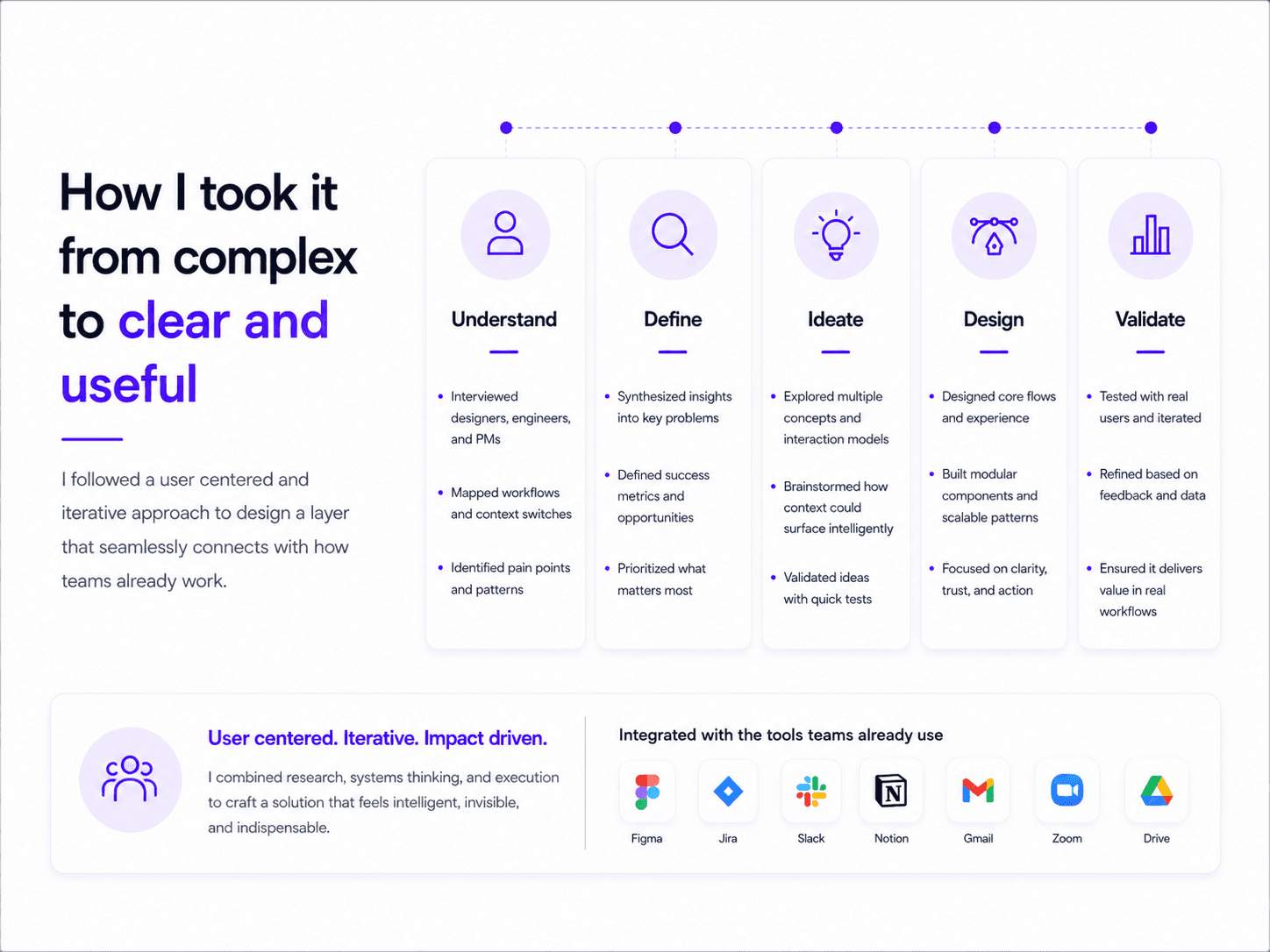
The Solution
The product is structured around action first workflows, where every surfaced issue is ranked by impact, linked to its source, and tied to a clear next step.

Dashboard Overview
The dashboard gives teams a single view of urgent gaps, system health, AI insights, and team activity so they can understand what needs attention first.

Handoff Tracker
The tracker shows every active file in flight, its status, open gaps, and delivery risk so design and engineering can stay aligned before handoff breaks.

Component Debt
This view makes design system drift visible by showing which components are out of sync, where they are used, and what should be fixed first.

Ask ContextOS
The assistant lets teams ask natural questions across connected sources and get answers grounded in sprint context, handoff notes, and system health.

Conclusion
This concept reinforced that AI is only valuable when it reduces coordination cost, preserves trust, and helps teams move with confidence.